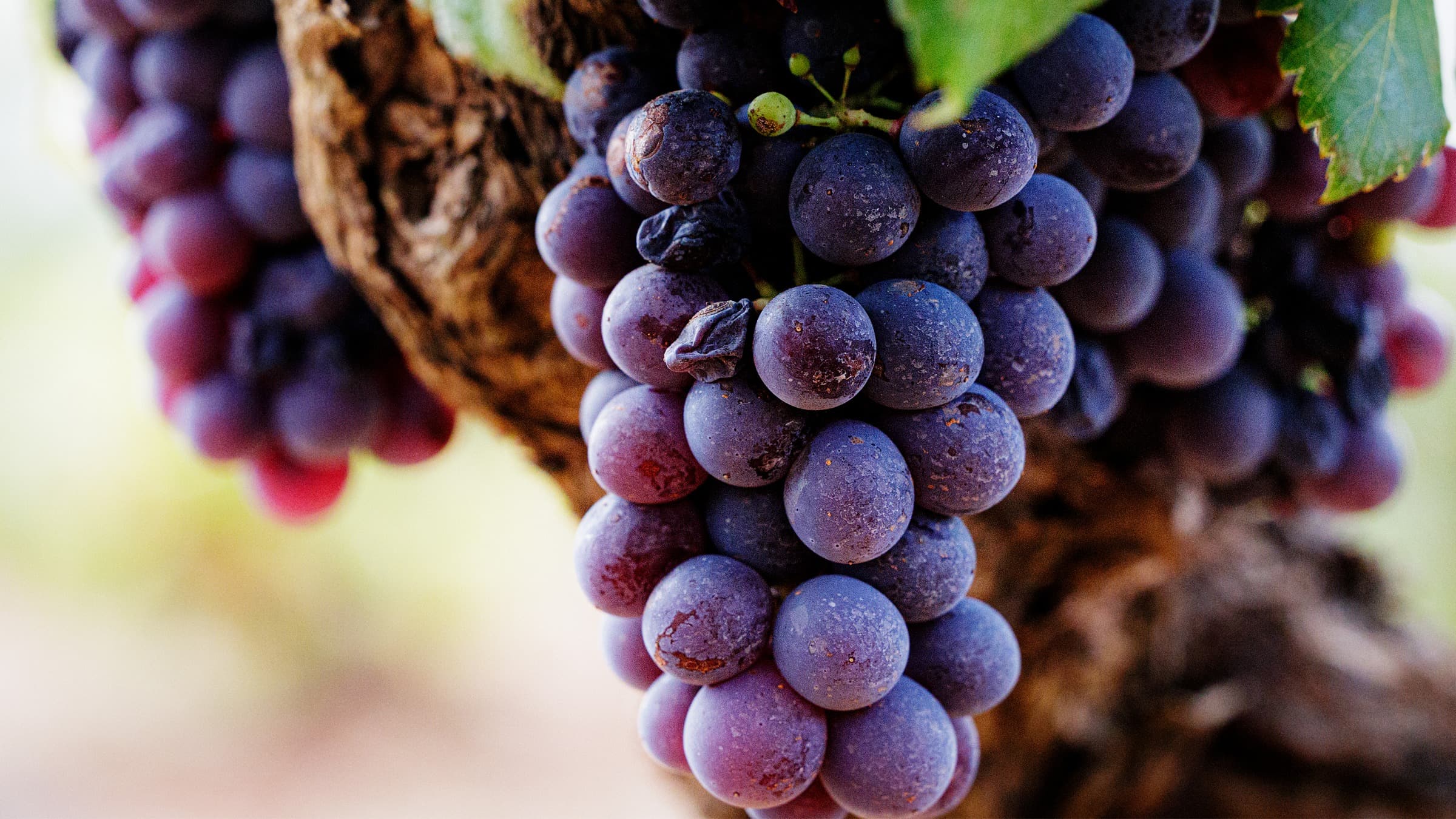
Giró survives in three places on earth: Alicante, Mallorca and Sardinia.
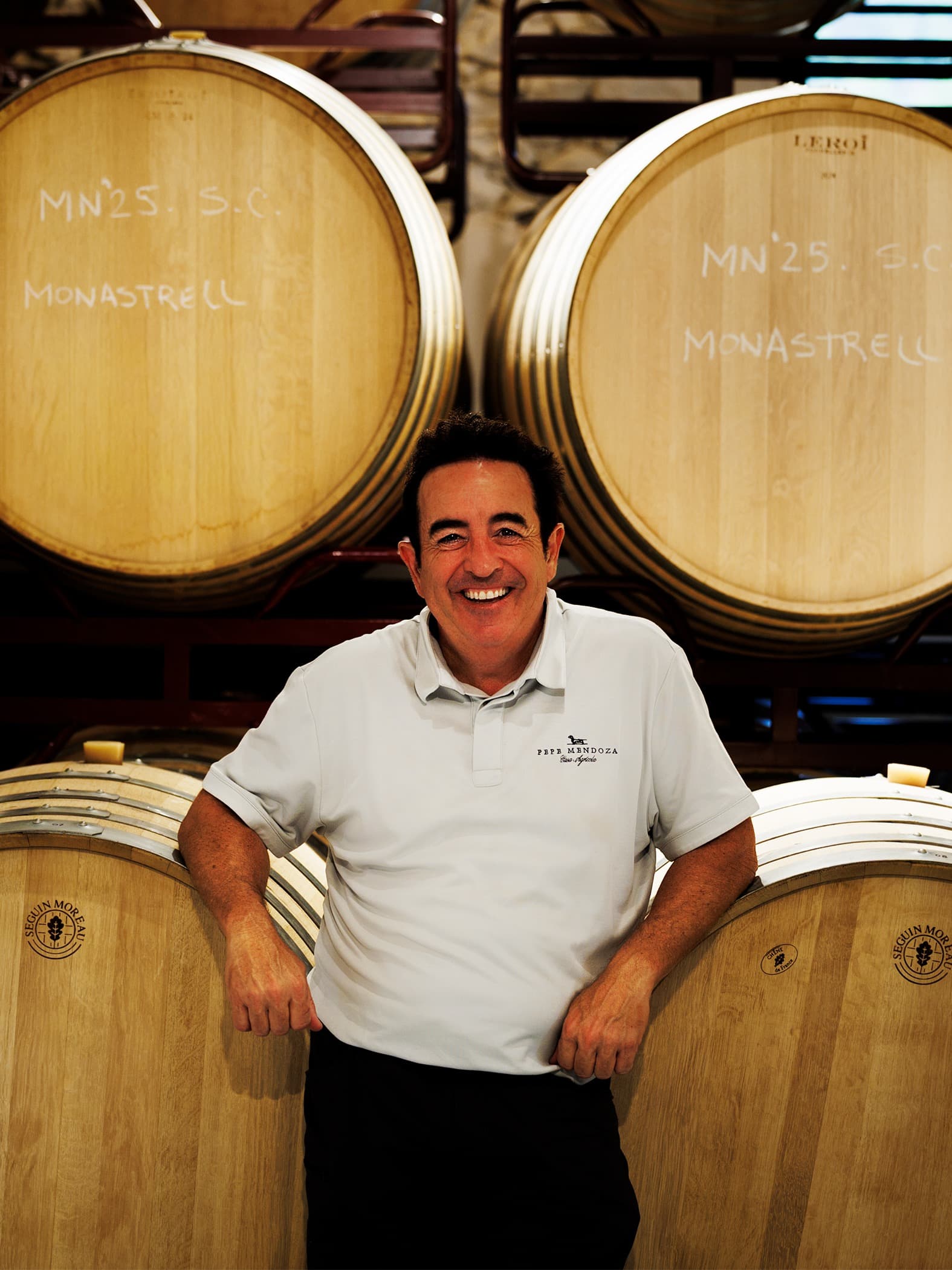
Pepe Mendoza gets the same question at every tasting and answers it with enormous patience. No, Giró is not Garnacha. He will explain why for as long as anybody wants to listen, and he has been explaining it for years.
Giró is a red grape that has all but vanished from the world. It holds on here in Alicante, on Mallorca and on Sardinia, and almost nowhere else. At the Finca de Abargues above Lliber, Mendoza farms twelve hectares of Giró and Moscatel on stone terraces built by hand under the Sierra de Bernia. His oldest vines were planted in 1923. Others went in around 1949 and 1969. They are low, gnarled, goblet-trained, dry-farmed, spaced at roughly a thousand vines to the hectare, which he will tell you with some satisfaction was the Roman density.
Mendoza's public argument for Giró is about water. Mediterranean varieties are adapted to heat and drought in a way that imported ones are not, and in a region running dry that is a practical matter rather than a romantic one.
Starting again on a hillside
He did not come to Giró young. For about twenty-five years Pepe made wine at Bodegas Enrique Mendoza, his family's bodega, and together with his father he helped build the Alicante wine boom of the 1990s. He could have stayed with a name that already sold.
In 2016 he and his wife, Pepa Agulló, started something much smaller. A family project at Abargues, on terraces the valley had half forgotten, with a promise to make wine only from what this ground gives.
The winery sits in a building from around 1900, raised on an older riurau of Arab origin. It is one of the open, arched houses where this valley once dried its Moscatel into raisins for export. The family will tell you the roof tiles were carved centuries ago by the Morisco who designed it. Under the arches the old cement tanks are still in use.
Less in the cellar
Pepe calls his idea pureza mediterránea, Mediterranean purity. Native grapes, grown on the land that shaped them, and as little as possible added on the way to the bottle.
In the cellar that means wild yeasts from the vineyard, whole bunches with part of the stems, large old barrels instead of new oak, and clay amphorae made by the potter Juan Padilla. His Moscatel called Pureza ferments in those amphorae. Abargues is pure Giró, the clearest portrait of these terraces he makes.
He has a word for the whole approach, vitilocura. It joins the vine with a healthy dose of madness, and anyone who has watched him on a steep terrace in August will understand why.
The friend with the raisins
In Lliber, Pepe's wine has a neighbour. Ovidio Mas is a fifth-generation raisin maker and the last commercial artisan still practising the escaldà, the old method of dipping Moscatel bunches in hot lye so they dry in days instead of weeks. In 2025 the farmers' organisation ASAJA gave him its award for agricultural enterprise.
The two men have been friends for about twenty years. Pepe names Ovidio as one of the two young men who first showed him this valley, and Ovidio's Moscatel goes into his wine. His sweet Moscatel Origen is made partly from grapes dried on cane racks, the same tradition Ovidio keeps alive a few streets away.
Recognition
In 2024 Madrid Fusión named Casa Agrícola the most sustainable winery in Spain, and Salón Gourmets gave Pepe its award for a lifetime of work. Critics from Decanter to Jancis Robinson have written about the wines.
None of it has changed how the place feels when you arrive. Pepa runs the visits, by appointment, around two hours among the vines and under the riurau, with local cheese and almonds on the table. Two dachshunds, Lola and Syrah, will inspect you first.
Taste the Giró at the end, from the vines of 1923. Then ask Pepe why this grape matters so much to him. He answers that one in our film, The Terraces of Llíber.

 12 April 2026
 26 April 2026
 3 May 2026