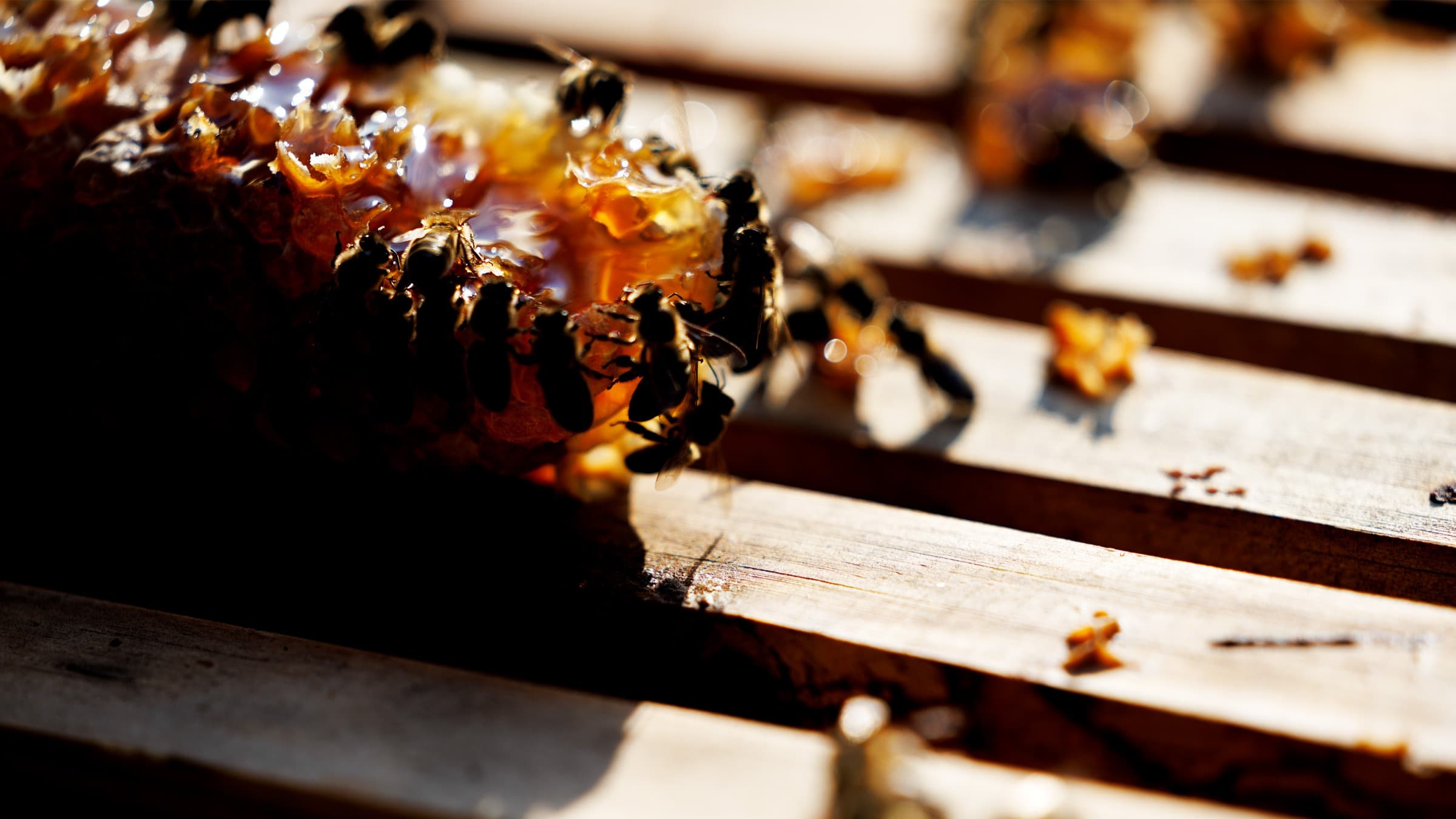
Around 650 plant species grow on Montgó. Eduardo Fernández's bees visit almost all of them. Bees fly up to three kilometres from the hive, so his colonies cover almost the whole natural park. Whatever flowers, they visit.
The MakersBiodiversityHeritage varieties
Around 650 plant species grow on Montgó. Eduardo Fernández's bees visit almost all of them.
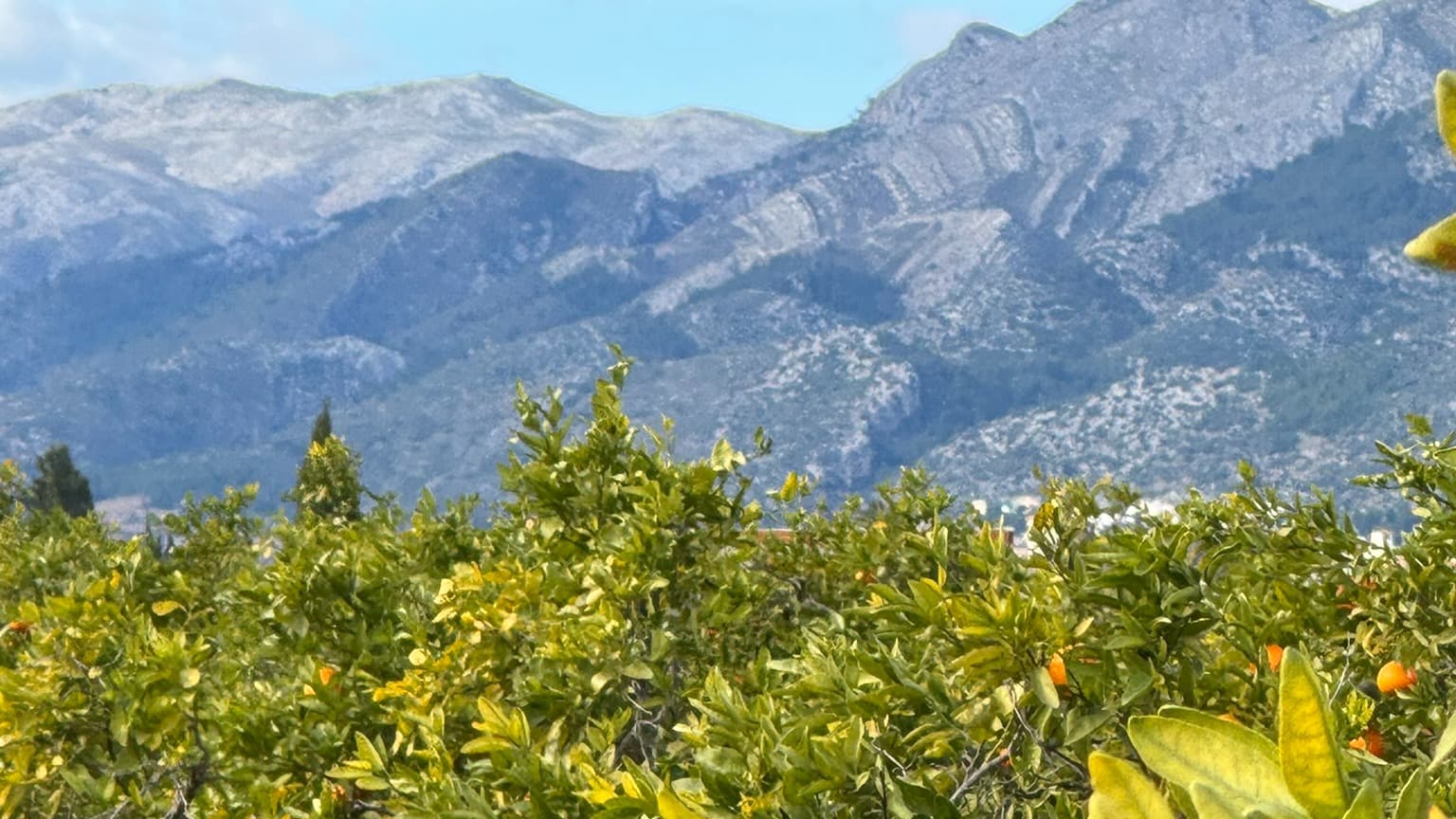
Montgó rises 753 metres between Dénia and Xàbia, and around 650 plant species grow on its slopes. That makes it one of the richest mountains for plants anywhere in Europe. Some of them grow here and nowhere else in the world. The north faces stay cool and shaded, the south faces bake in the sun, and the wind carries salt in from the sea.
For a bee, all of this is food.
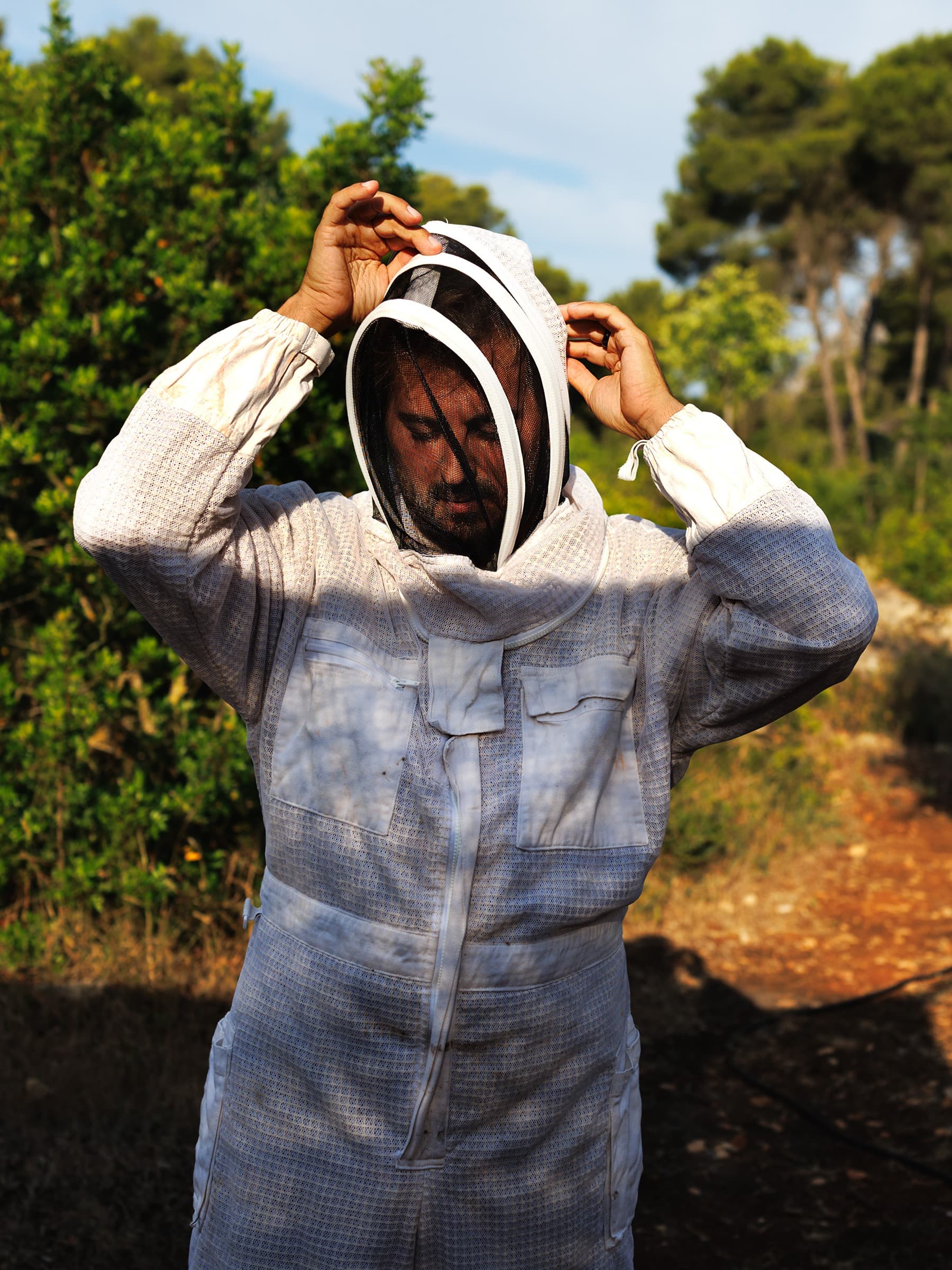
Eduardo Fernández keeps the hives of Miel Montgó on the plana of Xàbia, on land that once belonged to a Jerónimo monastery. The monks arrived in 1374, and only twelve years later Berber pirates attacked them. Today the busiest workers on this ground are his bees.
He started in 2020, the spring when the whole world stopped. While everyone else stayed indoors, Eduardo spent those months on an empty mountain, watching and listening. He still listens to a hive before he opens it, because the sound tells him how the season is going.
A honey that changes every year
Bees fly up to three kilometres from the hive, so his colonies cover almost the whole natural park. Whatever flowers, they visit. Rosemary gives a pale, quick honey. Thyme leaves a soft bitterness at the back of the throat. Wild lavender and raïmet de pastor bring their own notes.
So each jar records one season on the mountain. Taste honeys from two different years side by side and you notice the difference at once. Eduardo can tell you which wildflowers came back this spring, and which ones did not.
I have been on enough farm visits to be wary of the format. Eduardo's tastings are worth the drive. Most people have never stood next to a working hive, and very few have tasted several honeys from one mountain and understood why they differ. He shows you both.
Why a real jar costs more
Honey is one of the most faked foods in Europe. When EU inspectors tested imported honey, nearly half of the samples were suspected of being mixed with cheap sugar syrups. A jar from Eduardo tells you exactly which mountain and which spring it came from.
Beekeepers in the Marina Alta also face heatwaves and a flowering calendar that keeps shifting, with very little support. Their honey costs more because it has to. In 2016 local beekeepers founded Apicultors Montgó, an association for professional and hobby beekeepers who care about the native bee. They want a Marina Alta denomination for their honey, with real quality standards behind it.
They also visit schools. I think that may be the most useful thing they do, because a child who has met a hive will shop differently for the rest of their life.
Everything here depends on it
Almost everything that grows in this region needs pollinators. The almond trees that turn the hills white in February need them. So do the Moscatel vines on the terraces and the tomatoes in every kitchen garden between the mountain and the sea. Nobody pays these insects for their work.
Montgó has the plants. It needs the bees to keep working them.
Buy the local jar. It costs a little more, and now you know what the extra is for.
Eduardo Fernández is one of eight Food Heroes in Season One of Taste of Happiness. His film is The Mountain in the Jar.



 26 April 2026
 3 May 2026
 18 May 2026