Taste of Happiness

25 September 2026 · By Anna Drozdowska

Farming without water

Benifallim has been losing people since 1857. Miguel Ángel García González came back to it, and reads the health of his olive groves by counting wild orchids.
The SoilThe Makers
Farming without water
Benifallim has been losing people since 1857. Miguel Ángel García González came back to it, and reads the health of his olive groves by counting wild orchids.
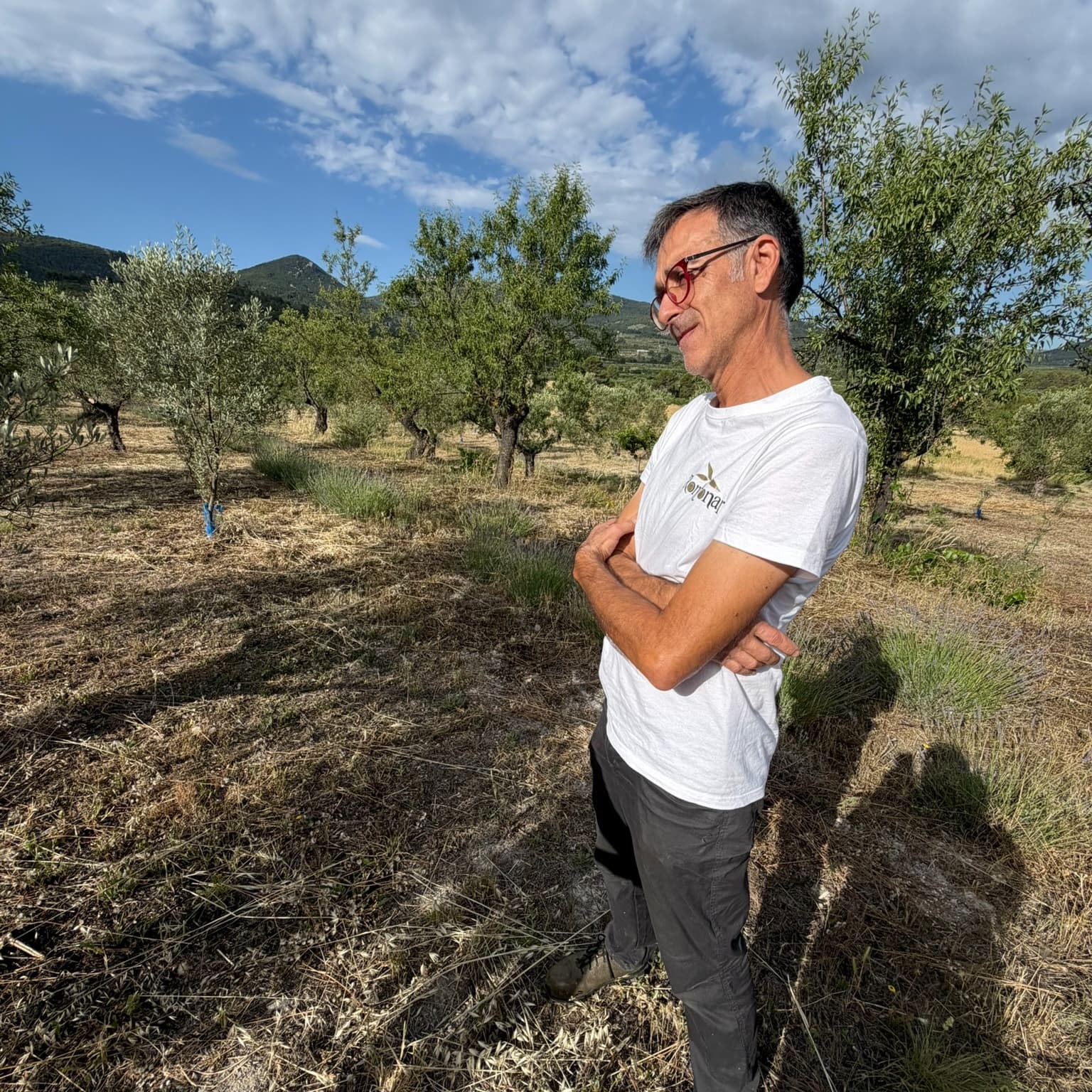
Benifallim is one of the least populated municipalities in the province of Alicante. It sits high on the western flank of the Aitana range, on the slopes of the Sierra del Rontonar, and the olive terraces above it are between 680 and 900 metres up.
In 2015, after twenty-five years in graphic arts, Miguel Ángel García González went back to the groves his family had planted and more or less stopped farming.
He works about twenty-two hectares of them now, alone, and the olives are varieties that most of Spain gave up on decades ago because they do not yield enough. Blanqueta. Alfafarenca. Mançanella. Native to Alicante, and until recently heading quietly towards the exit.
Nothing up there is irrigated.
Dryland farming at this altitude means the tree gets the rain that falls and nothing else, and everything about how you manage the ground is built around holding that water where the roots can reach it. Cover between the rows rather than bare earth. No ploughing the life out of the soil. Organic matter going back in. The grove treated as a functioning piece of hillside rather than a field that happens to have trees in it.

He has a way of checking whether it is working, and it is the detail I find hardest to forget. He looks for wild orchids. They grow on his terraces and not on the land next door. The deer, the mouflon and the wild boar come through his groves and skip his neighbours', which tells him something about what is growing under his trees.
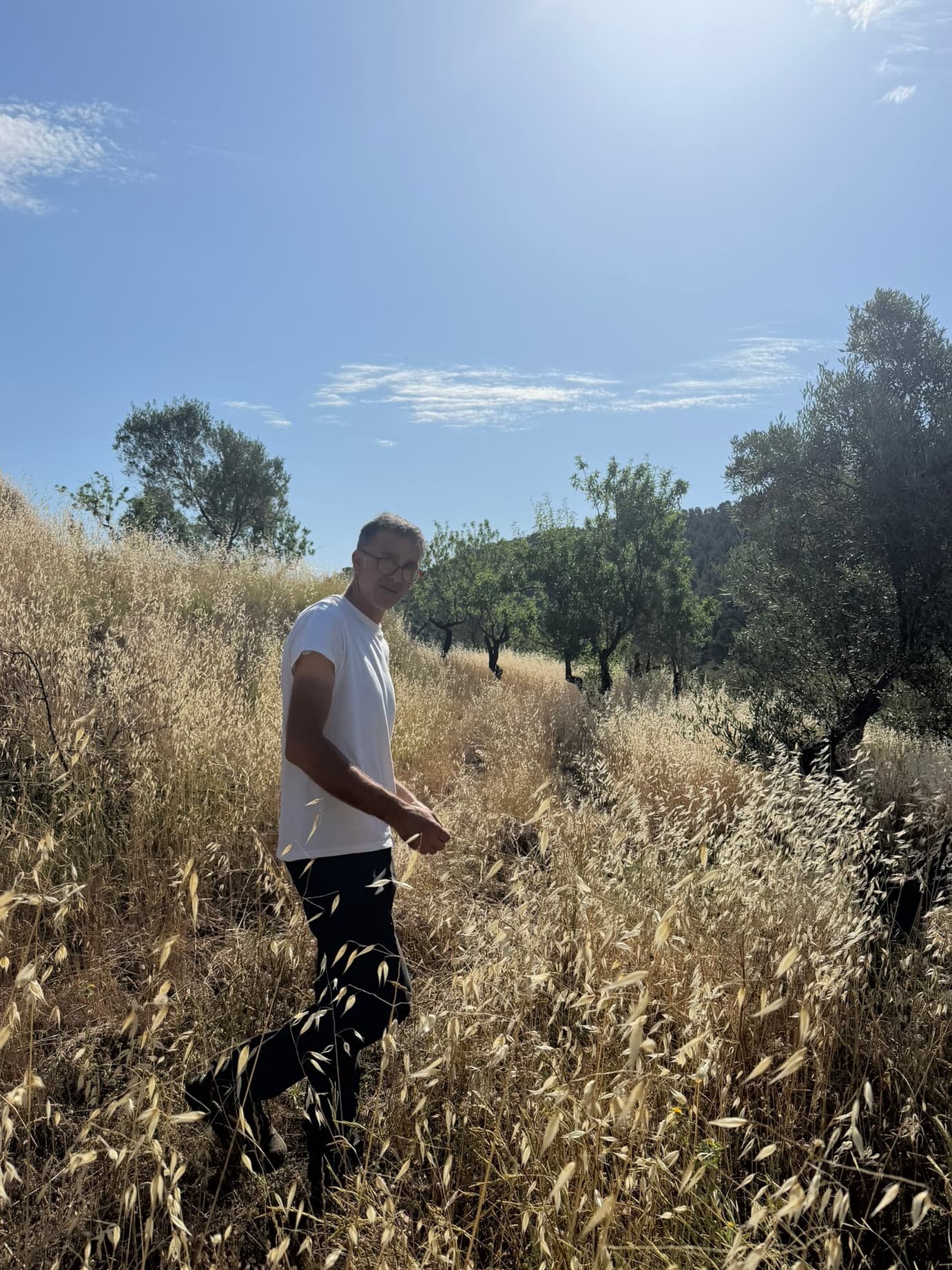
An oil chemist would measure polyphenols. He counts flowers and hoofprints, and then the analysis confirms it.
The oil goes to some serious kitchens. BonAmb in Xàbia, Casa Pepa, Audrey's: restaurants with Michelin stars that buy an oil produced by one man on a mountain forty kilometres inland, in a village most people on the coast have never driven to.
 
There is a version of this story that is only about olive oil, and it would be a decent article. The better story is about who is left.
Every abandoned terrace on that mountain was built by somebody, stone by stone, without mortar, and every one that collapses takes its soil down the hill with it and fills with scrub that burns.
Miguel Ángel is also a councillor in Benifallim, with agriculture, environment and rural development in his brief, which tells you he did not come home to be left alone with his trees.
Ask him why he did it and the answer comes back to his daughters. He wants to leave them something, and what he means by something is land in better condition than he found it.
A man in his fifties leaves a career in the city, moves to a village that has been emptying for a hundred and seventy years, and starts farming without water on terraces somebody else built.