
25 September 2026 · By Anna Drozdowska
Nine days instead of a month
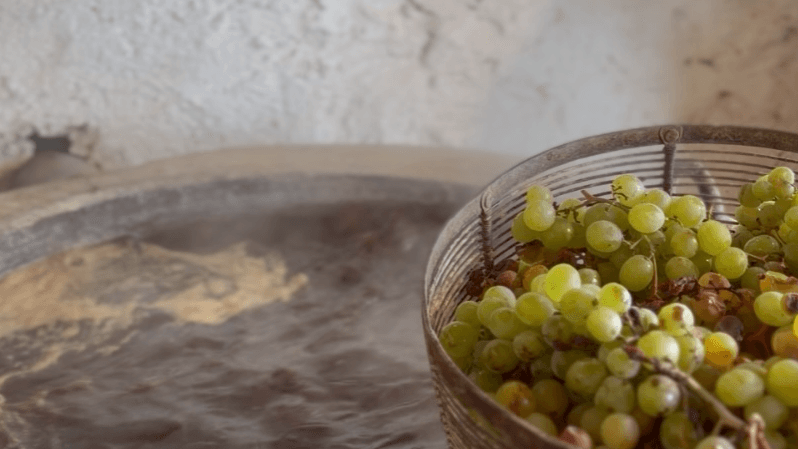
First the water has to boil. A fire of thin vine prunings burns under an iron cauldron. Into the water go sosa, a caustic soda, with a branch of olive and a few herbs. Then a wide basket of Moscatel grapes goes in, for only a few seconds.
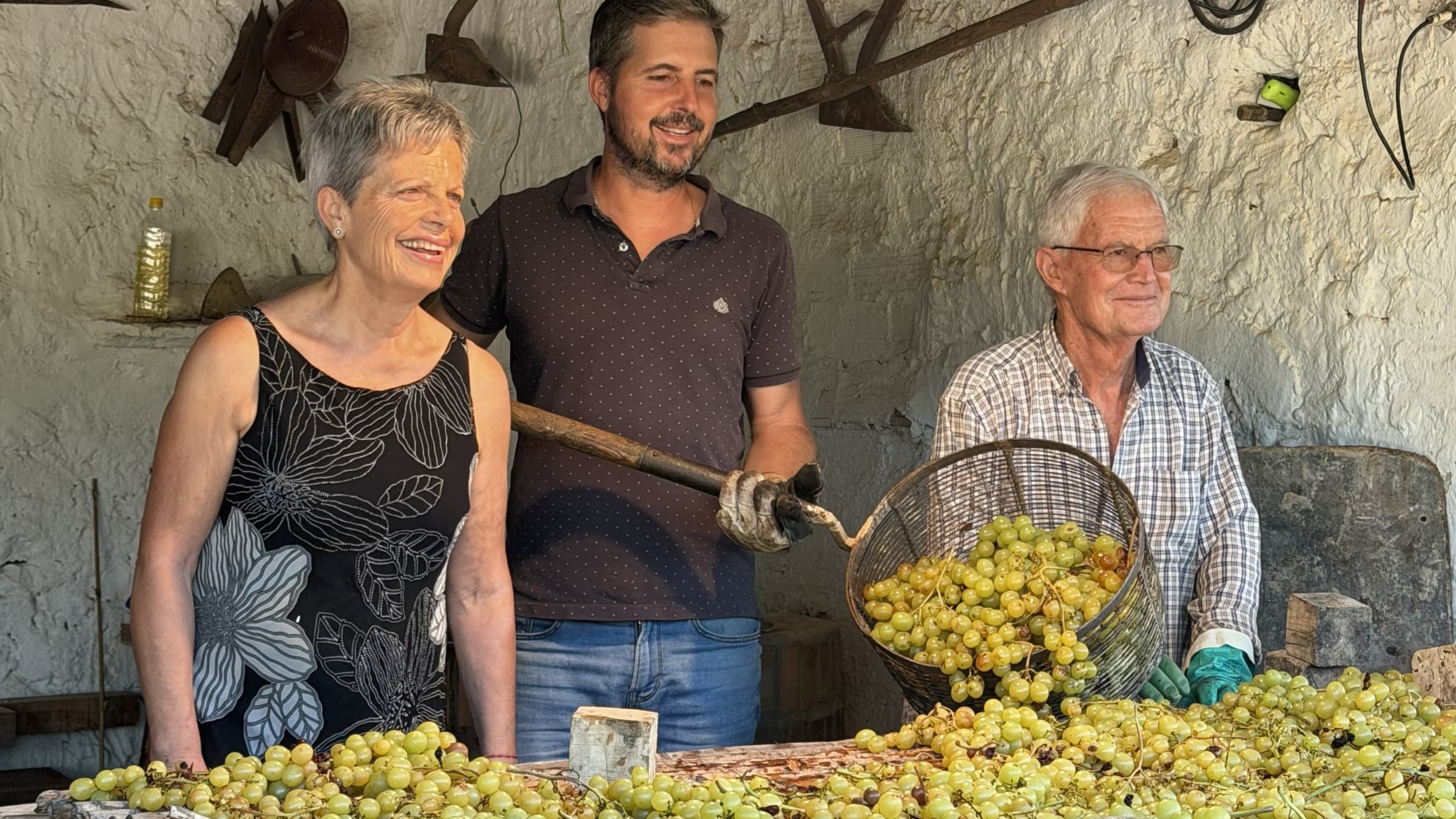
For a hundred years, a few seconds in a cauldron decided whether families on this coast ate well in winter. Ovidio Mas and his son still turn grapes into pansa raisins by hand.
Leave them too long and the grapes are ruined. Pull them out too soon and the skin does not crack.
This is the escaldà. In Llíber I watched Ovidio Mas and his son do it the way their family always has. They work fast and without talking, and nobody looks at a clock. The timing lives in their hands. The father lifts the basket, the son tips it onto a canyís, a flat cane rack, and together they spread the bunches out. By then the next basket is already in the water.
The grapes come out a strange yellow gold, and they keep that colour all the way to the table.
Why a few seconds mattered
The hot bath cracks the waxy skin so the water inside can escape. The drying time drops to about nine days.
That small change built an economy. In the nineteenth century raisins from these hills sailed from Dénia to Britain, where they ended up in plum cakes. The railway reached Dénia in 1884 to carry the crop, and the harbour quay is still called the Moll de la Pansa, the raisin quay.
The houses built for drying
Around 1910 phylloxera destroyed the vines and the raisin trade collapsed. The riuraus stood empty across the countryside. Many are still there, and some now host markets and wine tastings.
Five generations in two pairs of hands
Almost none of his craft is written down. How much sosa, how many seconds, how to spread a rack so the air moves through it. All of it passes from father to son, by watching and doing.
Spain declared the escaldà part of its intangible cultural heritage in 2018. The title helps, but the tradition survives because families still do the work every September. Llíber holds a fair for it, and schools in Dénia bring children out to try the cauldron themselves.
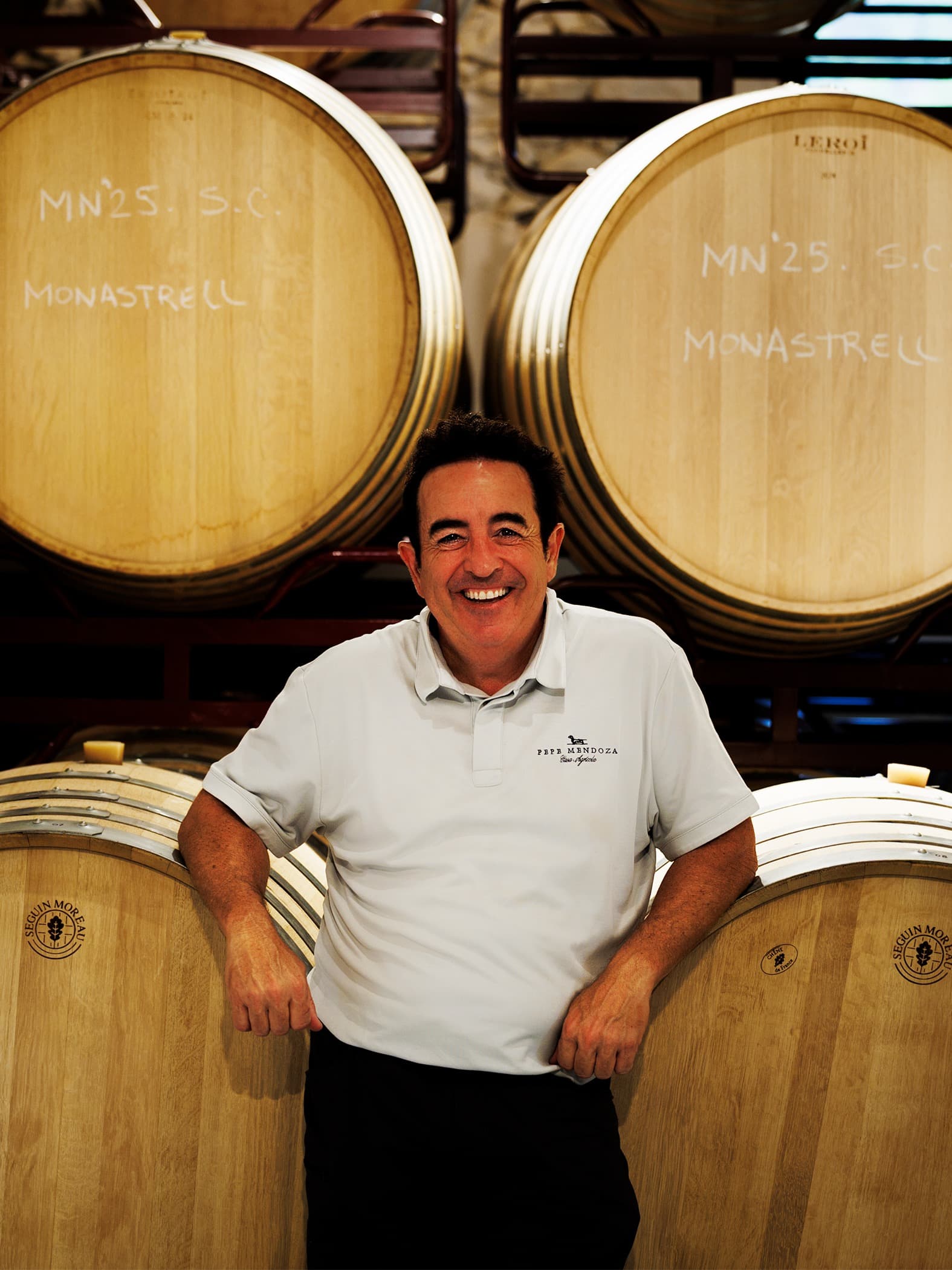
Ovidio has a friend nearby who knows the value of his grapes. Winemaker Pepe Mendoza met him about twenty years ago, and Ovidio's Moscatel goes into Pepe's wine.
Taste the difference
Come to Llíber in late summer, when the cauldrons are lit, and take a bag home with you.
Photography
Gallery
Recent posts
Latest field notes
and inspiration.
 12 April 2026
The most botanically crowded mountain in Europe
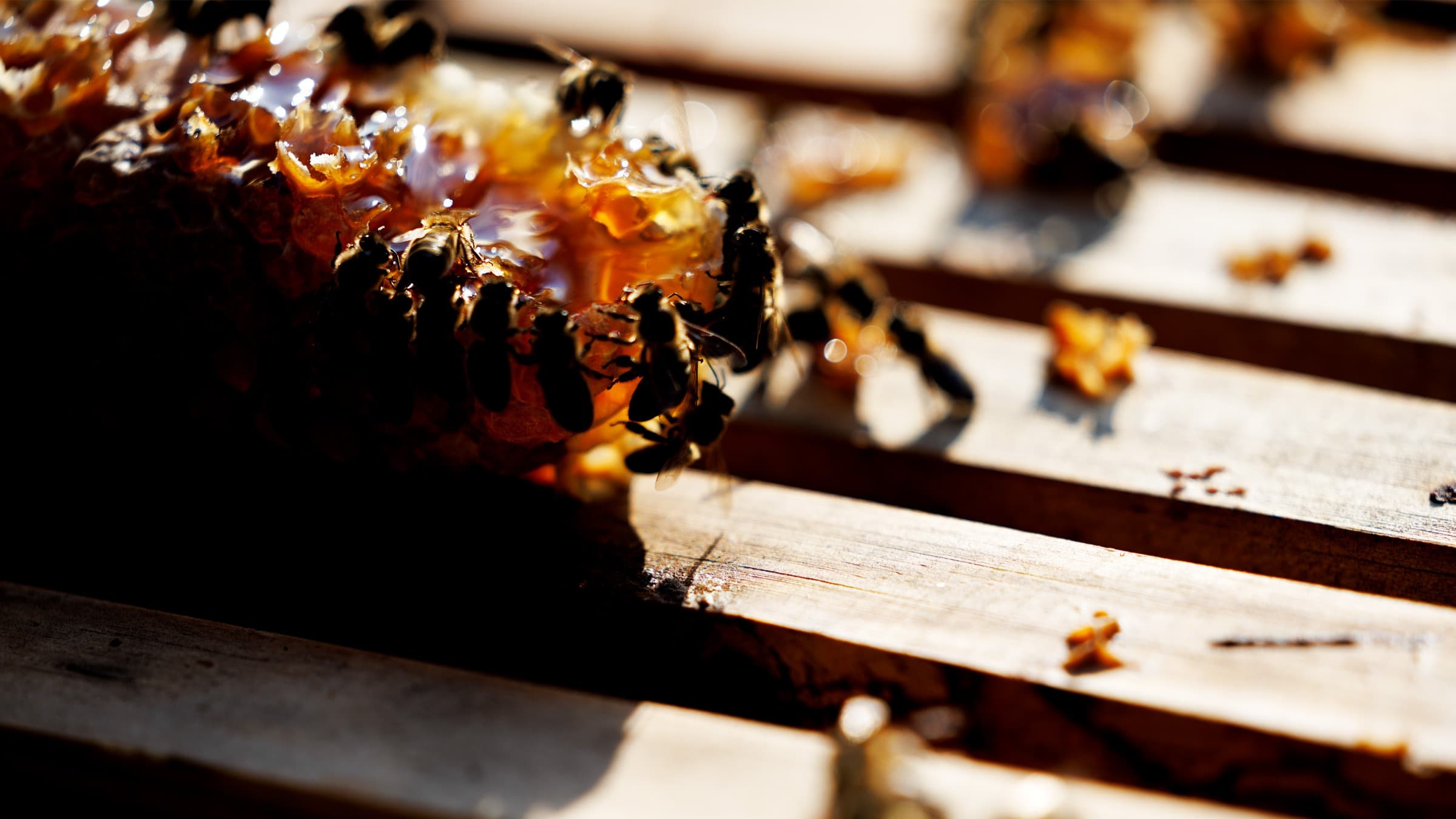
Around 650 plant species grow on Montgó. Eduardo Fernández's bees visit almost all of them. Bees fly up to three kilometres from the hive, so his colonies cover almost the whole natural park. Whatever flowers, they visit.
Learn more 26 April 2026
What regeneration is not
Regenerative is now on wine labels, hotel websites, restaurant menus, tourism strategies and skincare. It has had the same arc as sustainable. Useful term, then popular term, then a term that means whatever the person saying it needs it to mean.
Learn more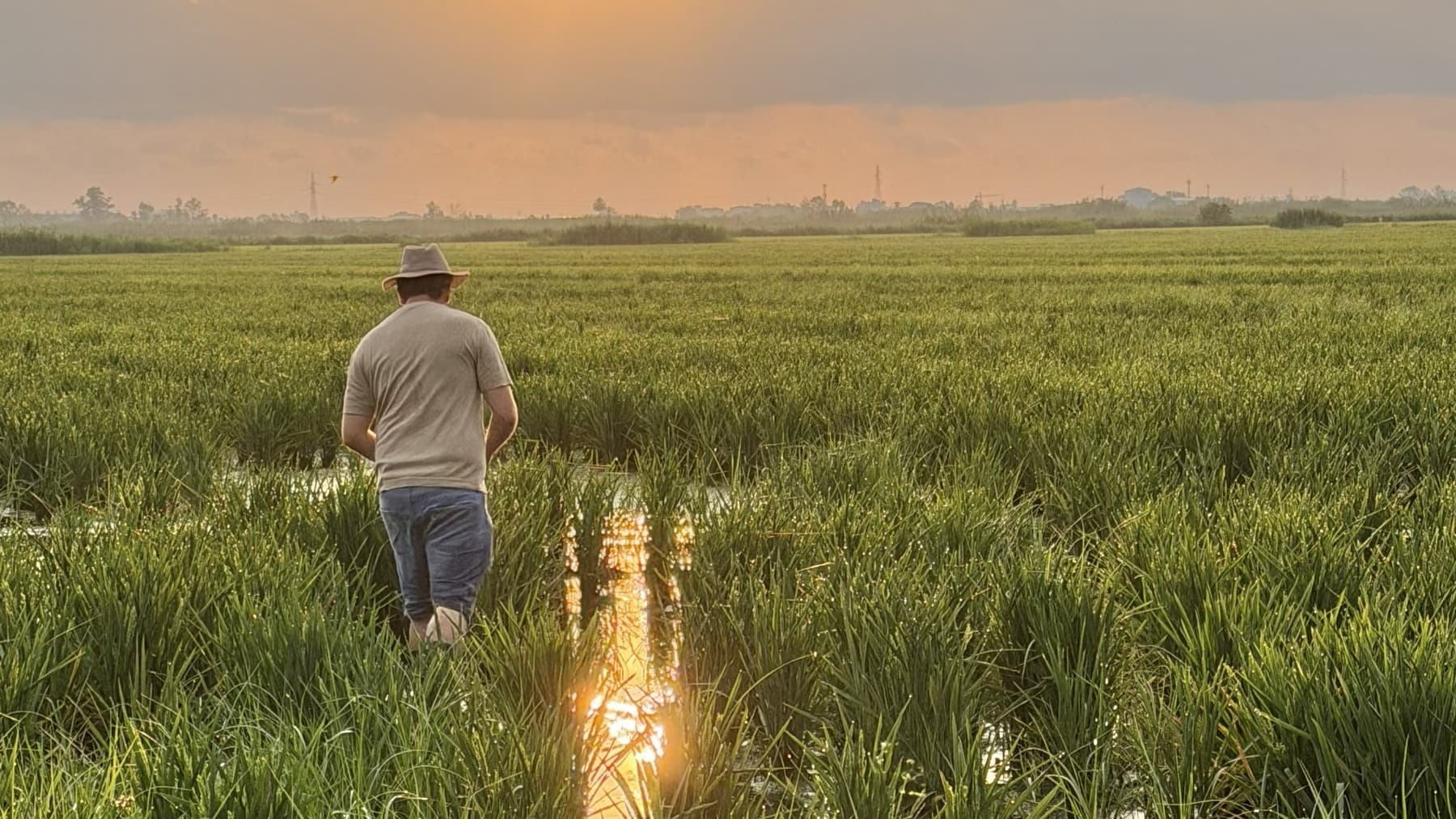 3 May 2026
The season nobody films
August is the month when the least is happening in the fields here. The vines are waiting. The olives are small and green and months away. The citrus is invisible. The rice is standing in water doing nothing anyone can see. It is hot enough that sensible work stops at noon.
Learn more