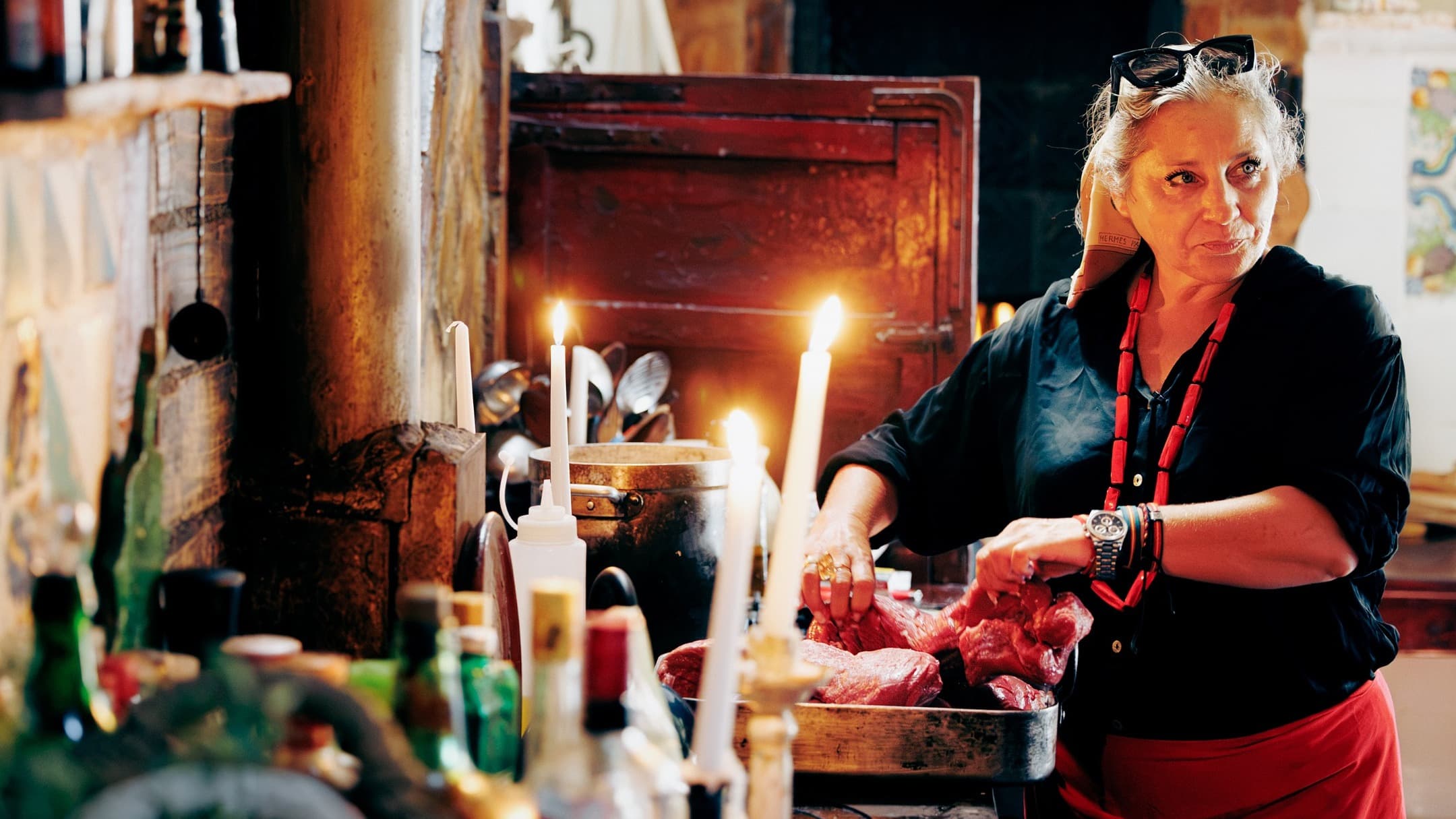
High above Xaló, Carolina Pateman Ivars cooks for a full dining room over two fires and a wood oven. Her father bought the ruin in the early seventies and spent fifteen years rebuilding it by hand.
There is no electricity switch to turn on at Maserof and there never has been.
The house sits on the mountain road that climbs from Xaló towards the Sierra de Bernia, surrounded by vines, almonds and olives, with the Bernia massif behind it and the Montgó visible in the distance on a clear day. Six courses come out of that kitchen on a Saturday, cooked over two open fires and in a wood oven, and they are eaten by candlelight off antique plates at tables that are around four hundred years old.
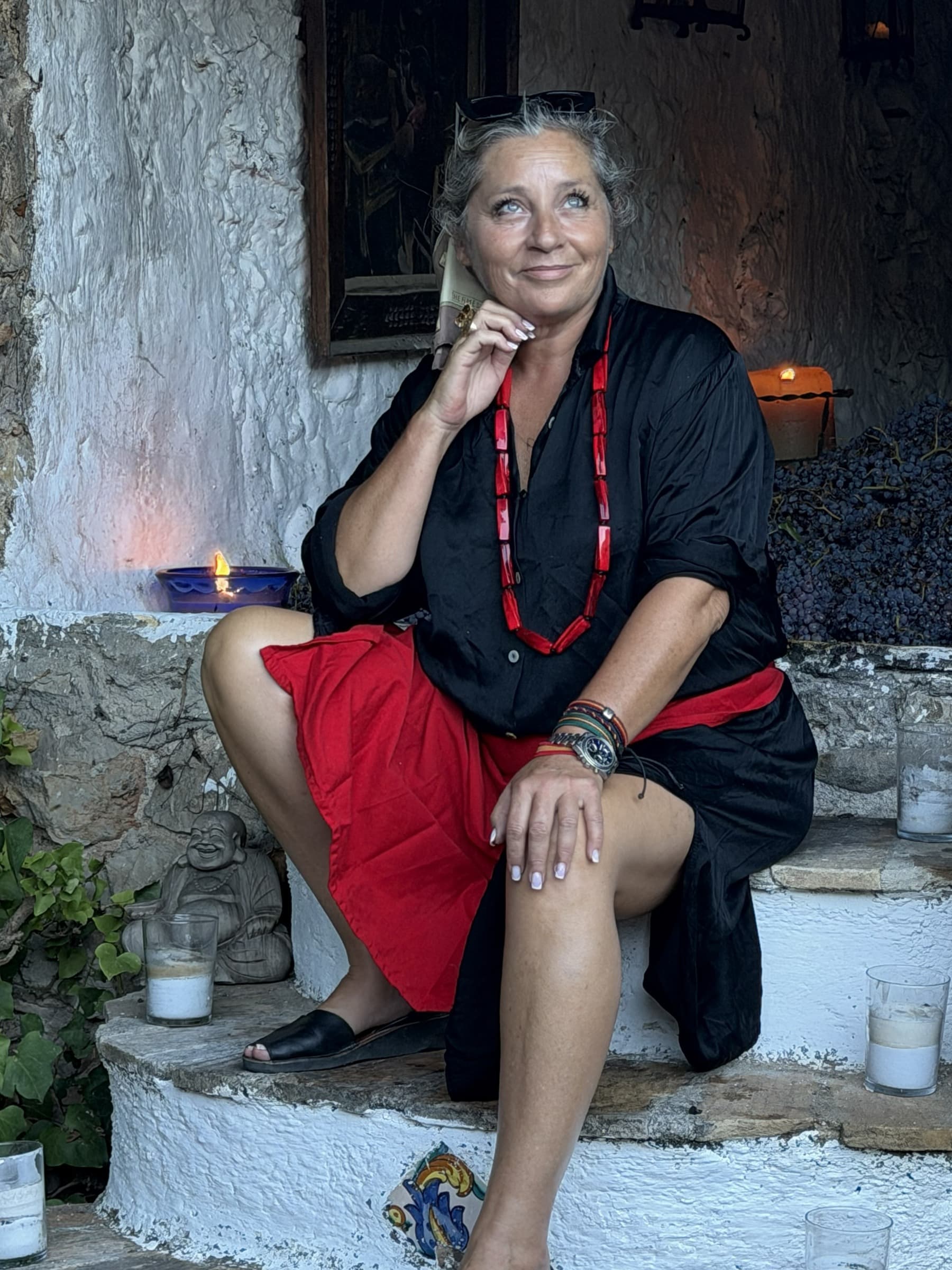
Carolina Pateman Ivars cooks it, pours it, tells the stories and, at some point in the afternoon, starts singing. Guests have been known to find the microphone in their hands before they quite understood how.
Her father was English. Peter Pateman, born in Lincoln, who by his daughter's account spent about ten years working as a woodcutter in the forests of Canada, came to Spain in the 1960s as a BBC cameraman, then gave up television after falling in love with a woman from Dénia called Maria. He dealt in antiques. The family credits him with founding the Jamaica Inn, said to be the first English bar in Dénia harbour.
In the early 1970s he bought a ruined farmhouse on the mountain and spent roughly fifteen years putting it back together, mostly with his own hands. He filled it with what Spanish families were throwing out cheaply at the time: beams, chests, sacristy furniture, ploughs, carts, scales, tiles, pieces from the eleventh century onwards. He died in September 2010, and Carolina took it on.
She is still rebuilding it. She will tell you so without embarrassment, which I like enormously. The place has been open as a museum since 2005 and it is openly unfinished.
Underneath the seventeenth or eighteenth century farmhouse there are older layers. An Islamic alqueria, because this whole valley was Moorish until 1609. Under that, a Roman villa, and from it a stone basin that has survived intact.
Every September the grapes are trodden in that basin. By foot, by candlelight, with people singing, and the juice running down into the stone the way it did two thousand years ago. The wine that comes out of it is red, Garnacha, and Carolina's own explanation of it is the most honest description of natural wine I have heard: most of the taste comes from the grapes, so it can taste different from one week to the next.
It is not really sold here. It is drunk.
Some of what you hear up there belongs to family legend rather than to any archive. A column said to come from Lucrezia Borgia's palace. An old oak chair called the throne, which is supposed to have mystic powers and which brave visitors sit in.
Carolina tells these stories as stories, which is the right way to do it.
The terraces around the house are cultivated while the hillsides opposite are collapsing under scrub. One family, one road, one house with no electricity, holding a piece of ground that the rest of this valley let go.

 12 April 2026
 26 April 2026
 3 May 2026